This is the familiar sentiment: you go into a relationship with wide, hopeful eyes. The man is sweet and looks at you in a certain way. You enjoy his company, and there is lots of common ground.
At some point, you feel uncertain about the direction of the relationship, and in an effort to relay open dialogue, you communicate this concern to the man while asserting that you’re not trying to pressure him, but want some more certainty about where you stand. You’re careful to word it in a casual manner even though the effort it takes to do so doesn’t feel casual.
The man acknowledges your concern and even admits that he should think about it and be more deliberate if you guys are going to keep dating. Eventually, he commits, and you guys are now in a relationship.
Initially, everything is going well, and the excitement of a more dedicated relationship reveals its benefits. You are able to claim him, and him you, and in public and private settings, there is more security in knowing that you are there for each other, and only each other.
At some point, for some reason, his smiles and warmth become slightly less pronounced. Slight irritations at things that you both don’t see eye to eye on begin to manifest. Intimacy and warmth, though still present, are slightly less celebratory. The optimism and communication lessens on some level, almost like he’s hiding feelings from you. And it’s not just him. Coupled with these changes, you also start to find certain things he does less appealing or cute, bordering on possibly annoying.
As none of this was present before the advancement of the relationship, this odd shift appears troubling. You’re smart. You learned from previous relationships. And you genuinely do not believe he is a dishonest or bad man, but his actions appear inconsistent. You even go so far as to express your growing concerns, and though he acknowledges it and agrees to try this or that, for some reason, something intuitively begins slipping.
You push forward. You do your best to spin certain things he does in a positive light, and communicate compromises. He reciprocates. But outside of these agreements, despite certain reprieves through certain dates or events or actions, the slipping seems to continue. Even the discussions you have to rectify this growing distance become less and less amicable as irritation begins to dominate both of your reactions.
The distance escalates. And escalates. And sadness begins to creep in. Loneliness. Coldness. Tears. Communication, in general, becomes tense, let alone conversations to rectify this growing space. You both appear to become frustrated, though that frustration may manifest differently in each of you; one person more quiet, the other, louder.
And then, finally, the conversation:
“I just don’t feel the same way.”
“I don’t know how to explain it, but something is missing.”
“I’m looking at you more like a friend than lover.”
“I don’t feel intimate or sexual towards you.”
You feel the same things, but you’re willing to work on it. You’re willing to compromise, to sacrifice, to fight. But he isn’t. You can see it in his eyes – and that makes you mad. Angry. Rageful. You invested, you entered into it together – you’re willing to fight - why isn’t he?
You agree to give each other some space. You try. It feels like he gets over it quicker than you do. But you still talk. You still try. But it almost feels like now that there’s space – a break, and as his need of you reduces, his interest and kindness does too. You feel used. You feel lied to. You feel betrayed.
You eventually have another talk, and now you’re focused on clarity. Some part of you still relishes the idea of salvaging this – that perhaps something can be done, and that feeling, the way he looked at you, can come back. So you meet and talk. And you don’t quite declare that you’re looking to fix things because you’d rather not put that out there – both to protect yourself and also prevent him from feeling pressured – you just want clarity. You communicate this.
“Why? What’s changed?”
But he doesn’t explain it. Either he can’t, or he won’t, or he’s not trying hard enough. You run through aspects of the relationship, and he agrees this worked, that worked – that the things that didn’t weren’t necessarily deal breakers. But there’s still no answer. No clarity. Somehow, he just doesn’t feel the same way towards you. In fact, you can feel he’s moved on far quicker than you have. Ruthlessly so. He’s relinquished his investment in you and is already looking elsewhere. And you feel robbed. You feel used. You feel angry. He misled you into investing more than him, because now that things are difficult, he’s cashing in while you’re still leaning forward. If he had invested as genuinely as you did, it wouldn’t be this easy for him.
You separate from each other. You cry on the way home. You know it’s over, and you wonder why you keep choosing men like this.
When one starts really opening themselves to the concept of other people’s observations about their behavior in a statistical rather than defensive manner, it provides them with a small peephole with which to look at themselves from the outside in.
This serves them with the advantage of examining the difference between what they perceive to be consistent, clear behavior from behavior others perceive to be inconsistent.
What we’re not often taught is that what may appear completely linear for us from the inside is in fact non-linear from the outside. And this isn’t our faults – we are the only ones that witness all the shifts that silently happen behind closed doors – we see the whole story, and so, that story makes perfect sense – all the equations add up. But others don’t experience our internal math. And when others share with us their external perspective of our story, we can begin to differentiate between what math is apparent inside versus outside of us.
If, for example, we examine the narrative provided above, there appears to be some linear story in your partner that makes sense to him – you want access to that story, but he’s not providing it. And him not providing it is almost more offensive than the outcome of your relationship. His comfort with that story can only be because the math makes sense to him – because it is confusing to you, it becomes infuriating and unjust.
But what if, totally unbeknownst to you, there is also a gap between your internal and external stories?
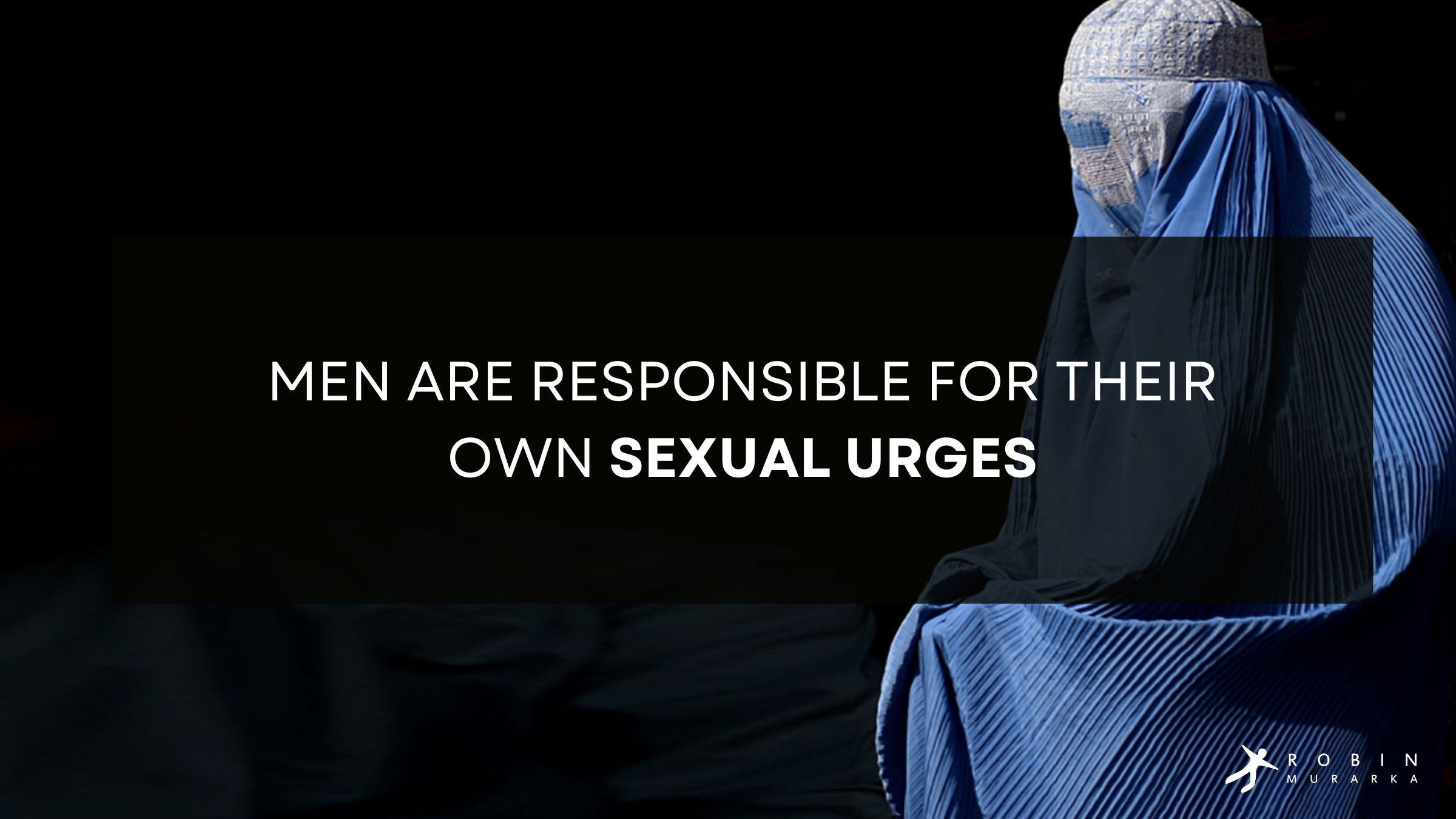
Ever since you were a small child – before you even knew how to speak - the expectations placed on you were more extreme than the expectations placed on your male counterparts. You were more useful as a trophy than a creative mind. You were more valued visually than you were intellectually. You were rewarded for the length of your hair, how doll-like you were, and your docile kindness more than your vigor and assertions.
As an adult, you are rewarded for shaving your legs; for wearing shoes that make you more poised for penetration – and with makeup – quite literally, for masking your true face away from public view.
There is no equal for your male counterparts: they can be hairy; they can have disheveled hair; they can wear sneakers and pants and coats and be scarred.
And this isn’t limited to what people can see: even the hair on your privates becomes something you must manage on a day to day basis to feel fully accepted and powerful as a woman, even though only you can see it.
Doesn’t it seem plausible that if you live a life where you must hide so much of your humanity in order to be accepted, and therefore loved, that you may have internalized stories that the outside world never sees? Stories that drive thoughts and actions that make perfect sense to you, but are not understood by the men you are trying to connect with?
If you have not only been loved for adapting to the world’s expectations of you, but punished when you’ve failed to do so, what makes you think these adaptations you’ve adopted, from makeup to your posture to shaving your body and managing your periods are limited to only your physical properties? Isn’t it likely you unknowingly also adapt your psychological reactions to what you perceive is expected of you?
And therein lies the rub.
You are following the rules.
You have been told that you will only receive love when you provide a certain version of yourself to the world around you. Even your parents view you this way. And so, when you meet this man, and date this man, and pursue this man, you wear makeup, and like the makeup, you color your actions; you color your smiles, your likes and dislikes, your affections – even the tone of your voice. The more “female” you are, the more effectively you do this. Because that is what you are taught a loving woman does.
Parts of you may still exist and exude themselves, just like your color preference in blush; but you’re still going to perform in an optimal way to accommodate what you perceive to be the rules of the world: that you are only lovable, and loving, when you adapt to the expectations that are placed on you.
The husband. The child. Facebook photos. Happy pictures. Family gatherings. Cooking good meals. Being welcomed by in-laws. All of these are the gifts you are promised if you follow those rules. From childhood till now – so you work towards it, following the rules.
But they lied.
And you don’t need anyone to tell you they lied, because this is the root of the cause of that horrible moment when you look into his eyes and you see what was once lovely is now gone.
He fell in love with the version of you that you presented to accommodate what you perceived to be his expectations. And your story tells you that he knows that’s what you’re doing – that he sees the inner you, and will love the inner you as the courtship evolves and you normalize to a more true version of yourself. That the inner you is a powerful, passionate woman that is willing to do whatever is necessary to make the person opposite feel loved by adapting to their expectations.
Unfortunately, this is an archaic method of thinking and is predicated on the false sense of sales that women have had to manifest in order to ensure the ancient survival of themselves and their children. Not anymore. Now, you can buy your own house. You can have your own kids. You can do every single thing a man can do, just as a man can without you. But this destructive math has been grandfathered down from eons ago from mother to daughter, father to daughter, father to son, and mother to son. Vestigial roles that require self-mutilation as a mechanism of providing a warped version of love; just because everyone does it, that doesn’t inhibit it from being completely alien and incorrect.
“Something’s changed,” he says. He can’t quite explain it.
But we can. You followed the rules – you smiled, you laughed, you literally altered your reactions at the subconscious level to ensure he was comfortable – not an act of manipulation, but an act of love at the core of what you’ve been taught. This is courteous. This is love. This is what your mother and father have taught you is part of being loving. This is what the world has taught you is the definition of love.
And he seems to react well to it. He seems to embrace it. He seems to love you for it. But what you don’t realize is that he has no idea this is what you are doing – he’s not loving you for following the rules and accommodating him. He’s loving the behavior he thinks is who you are. He has no idea you are loving him by accommodating him.
So after you invest all that love and care into this man, at some point, you’re going to want reciprocity. You’re going to want him to accommodate your needs. To adapt to what you want. To sacrifice like you have. And when you place that expectation on him, he reneges, because in your story, that was the loving exchange. That you demonstrated to him your willingness to adapt to his needs out of love.
But in his story, you were just two equal individuals being yourselves, caring for each other in whatever way you saw fit and fair. He didn’t notice you were altering yourself as an act of love because that was your internal story – an old story that you don’t even consciously recognize anymore. It’s just the way the world is, and your emotional definition of love, no matter how differently you may consciously try to describe it.
Think about that massive disconnect. Your subconscious perceives self-sacrifice, altering yourself, as an act of love. He embraces you, and you perceive that he is doing so because he knows your story – he knows you are sacrificing, altering yourself, and he adores you for it, because you’re very good at loving.
But he has no idea that’s what you’re doing. In fact, in all likelihood, almost all of what you are presenting to him is in fact this sacrifice – that is who you are presenting. The real you is quite secondary to showering this man in love – what importance is it how much you love this food or that food as compared to him, when what’s most important is him feeling loved? And that you are being an effective, loving woman? Isn’t that all that matters?
And the crux of it all is indeed the power to love – isn’t that more important than your musical choices or the food you enjoy? Your ability to love says much more about you than anything else, and it is absolutely reasonable for anyone to expect that they will be embraced and valued for this extremely unique strength. You are right to believe that it is the most valuable thing in you, and the shock that this man is too stupid to recognize that value is the core of the pain you feel when it all comes to an end. You look at him, and it’s like he’s not even the same man anymore, because his value system is so grotesque compared to what you thought it was.
But we can’t dictate what the other person needs to feel loved just because we come into the relationship with a certain definition of love. You can’t hug and kiss and feed your cat using your own formula – you need to adapt to what the cat responds to, if indeed you want to create and maintain a positive working relationship. And second to this, you need to be aware you are adapting, and expect the cat to appreciate this adaptation. In the case of the man, you’re jumping to the second part without acknowledging the first.
So despite your definition of love, and your intent being sincere, and your actuation of these two being powerful, in the case of this man, unless he sees the story underneath, he’s not in a position to value your loving actions. His definition of love may in fact be predicated on a woman not adapting herself to his needs – in which case, your adaptions would in fact repulse him rather than attract him. But, even in this case, your own conclusion would be that he is too stupid or immature to value what wonderful love you have to give.
As previously illustrated, you’re conditioned to alter yourself under the belief that the world will only love you if you accommodate its expectations. Further, this corals your definition of love into one of accommodation: making him feel good and comfortable is how I love him, and he should feel loved as a result of me doing so. And it seems, initially, he does. Then he rejects that same love he initially embraced.
Whether or not that definition of love is good, bad, realistic, accurate, or changeable is a more complex topic, and not entirely relevant to the cure to this cycle of confusion. What we can start with, relatively simply, is to understand our definition of love.
In this case, your definition is: by making him feel warm, comfortable, fed, desired and nurtured, you are relaying the ultimate definition of love.
Be aware of this. Relay this belief unto him and yourself. Make sure he is aware so he can contextualize your actions. Rather than bask in the glory of your love, he can begin reciprocating immediately under the rational belief that such a love can certainly not be one-sided.
By simply acknowledging to yourself and to him that this is what you are doing, it forces the emulation of the actual relationship immediately rather than you both suffering the terrible crash when reality hits months later.
And perhaps most importantly, it allows both you and him to determine what actually makes him feel loved, and what actually makes you feel loved, and you can engage in a reciprocal, adult relationship immediately instead of selling him the delusion that you are the surrogate mother he’s been looking for all his life, by your very nature.
Disclaiming that you are not at fault for every failed relationship seems almost necessary in the current environment, whereby everyone is attributed some level of perpetual victim status - especially women. But it does not benefit anyone to root their identity in being a victim; in fact, it directly inhibits personal responsibility which is contrary to their own happiness; blaming the world means relying on the outside world to solve your melancholy, which you have no control over. Conversely, fighting to take as much responsibility as possible actually empowers you to control more of the variables that go into your life - if you are willing to forego the ego warring that serves no one, yourself least of all.

Jump into one of Murarka's novels. Watch one of his interviews. Read one of his articles. There's so much to explore.
Not your average self-promotion. Real topics, uncensored. Funny & raw.
Browse Murarka's work and start the adventure. There's something for everyone.
Want to get a taste of Murarka's work? Grab a short story and get immersed.
Poignant opinions on subjects related to psychology, philosophy, and the human condition.