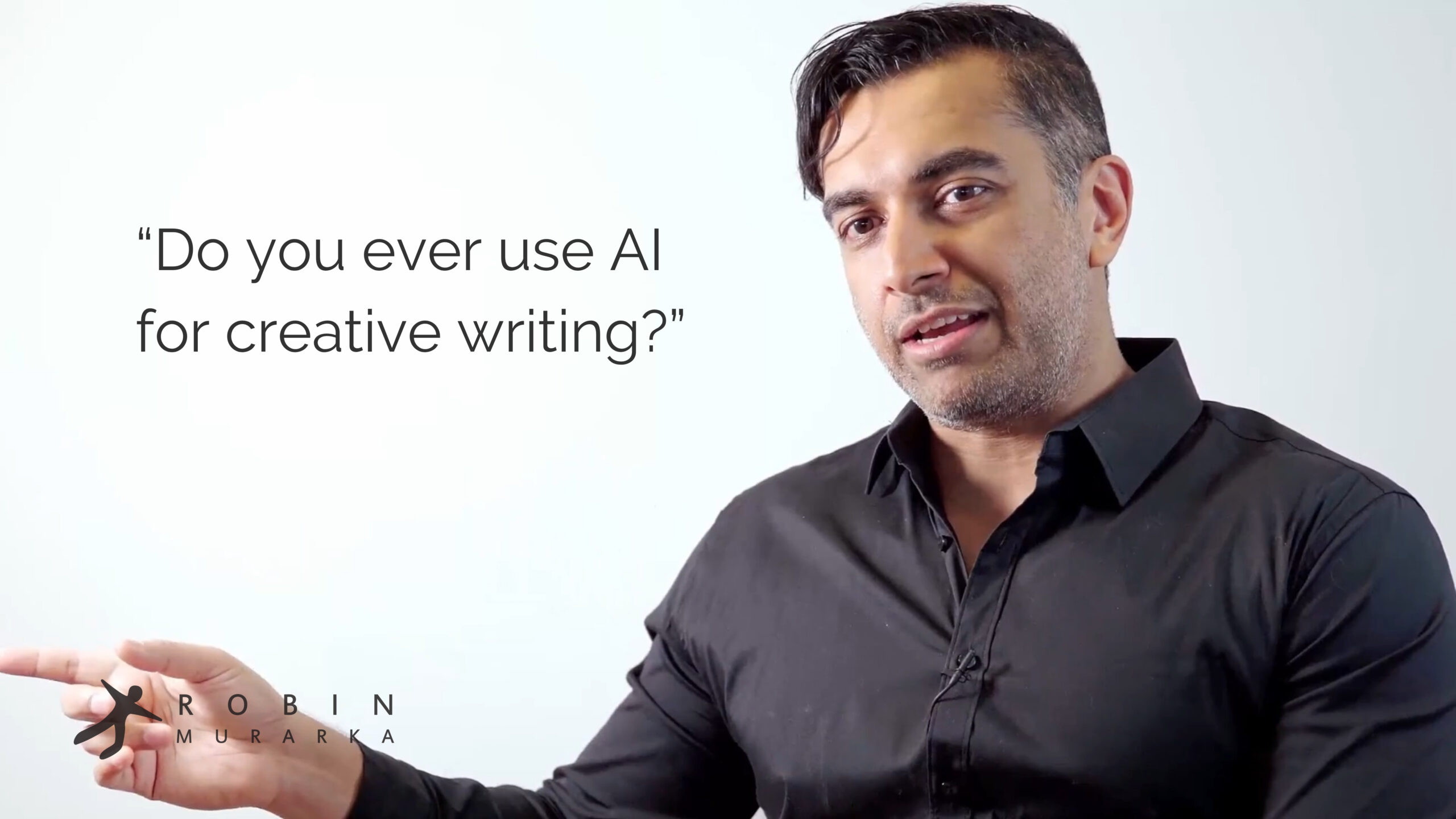
Hello Robin, how are you?
Good, how are you Paul? I'm very very well thank you.
So the first question we've got for you Robin is like this is the writing and creative journey. How long have you actually been involved in writing?
I've probably been writing all my life — but not terribly confident or well about it — until probably around 2014 when I started writing Aiken, which is my first novel, which took me many years.
Many years. Right. Which one is that? Right here. Oh, Aiken. Right. Fantastic.
Excellent. What's that critter about? Aiken is kind of — so do you know what literary fiction is?
Literary fiction. Maybe you should explain what literary fiction is. Because I probably have no idea. Well, it's good to talk about it anyway. So literary fiction — everything I write is somewhat literary fiction — and literary fiction generally involves subjects that are a bit darker but realistic to humanity, because humanity can be pretty dark sometimes.
So someone said the same thing about the truth on my podcast. So although it's not specifically pessimistic, it just um confronts a lot of the philosophical, existential, and psychological things that uh we as humans go through — that we may not experience in movies or books on a general basis — because a lot of media nowadays is very feel good, because people just want to feel very good, or it's a short fix or something like that.
So a lot of the books I write are quite intense. Yeah, it's either feel good or they're trying to make you fearful. Yeah. Yeah. So like a lot of horror works really really well — so it's stimulus. So these are more — they kind of bring the humanity out of you — and they can be challenging in that way, but also really beautiful in that way as well.
So yeah, Aiken is one of those. That's really dense in that sense — very uh existential and stuff. Fantastic. It's based in the desert. Uh, it's archaic, which means in an ancient time. There's no technology um like we should have these days, because it'd be way quicker than setting up a live stream. But then again we get to communicate much more effectively using technology, so I love technology. But there's a thing about simplifying it to see the inside as well, right? You bet. Yeah, cool. Yeah, they're sticks, don't they? Yeah. No, it's good.
All right, so Robin — five words to describe you or maybe about your writing.
Human? I'll go with the writing. I'm not good at describing myself, I suppose. For the writing, I would say: human, intense, uncensored.
I really loathe censorship, so I'm one of these people who I really like the truth to come out — as you were speaking about earlier — and so whether it's topics you would be kind of shying away from, which we'll get to, I'm sure, with the latest novel, and stuff like that.
Okay, so I've said a few words.
Does that mean that you talk a lot? I can — I'm actually introverted as well as extroverted — but I, when I get talking, I talk as you can tell. Like you're waiting for me some of the time, so yeah, I do. You say I'm just like — I love you sometimes. Yeah, no, yeah, all right.
So what else have we got here? The indie — I don't know — what drew you into writing in the genre that you're writing?
Oh, that's a good question. What drew me into it? It's not mine, it's Diana's. No, no, it's yours, it's yours, it's yours, Paul, it's yours.
I can't — it's just an intrinsic natural need. I don't know how else to put it. I don't know how to write any other way.
It comes naturally. It's always kind of been the way I do it. In a way, the way I write prose is similar to poetry in a sense, because poetry generally tries to examine something in an abstract way, but it's emotional. And so the prose I write — and I've actually had that feedback from people — that even though it's prose, somehow there's a sense of poetry to it.
So I think that that's probably what drew me to it: to write really good poetry, because I'm not necessarily that adept at poetry, but prose is my thing. So all right, all right. And people are making that connection. Yeah, they are. Like people will read the prose and they'll be like — there's a rhythm to it, or the wording to it — there's like a song to it of sorts, even though it's a story, you know? So yeah, yeah, yeah, yeah, right.
And then the other question was about the indie author experience — yeah, writing and getting the books out there.
Yeah, um, it's obviously a tough process because you want people to read your stuff. But for me it's not about — I want people to really read it — because the stuff I write is a bit intense. It's a bit different than a lot of the other stuff that's available out there.
So I wouldn't say it's a niche audience, because I think most people who do end up reading it find something beautiful and special about it — because it's human and accessible — but it's not necessarily fantasy romance or horror or mystery in and of itself. It does contain elements like that, but I don't sell it like a genre fiction specifically.
So sometimes talking to people is the best way to kind of do that — get the message across. And that's the big element of marketing of your books, isn't it? Yeah, yeah, yeah, yeah, yeah. So it's a bit like my podcast, because I interview somebody different in every episode. Yeah, yeah. So they get the same questions, but they don't link — like it's not a football podcast. Yeah, yeah, yeah. So you have the similar issue.
Yeah, well it's not an issue specifically. It's just — what if I get to talk to people, then it's different. Then they get intrigued, because they're kind of getting a flavor for something they may not get that often. So they're not attuned to it, but then they realize — I do kind of like this and want this kind of thing. Yeah, so if someone else was to start being an indie author, what three tips could you give them?
Just keep writing a lot and try to write the same thing over and over and again — uh, if you're learning to — because that teaches you how to communicate and connect your brain to the words that you're actually getting out there. I would say that's the main thing. Yeah, that's like a perfect practice. Yeah. Principle, is it?
If we have time, I'd like to discuss the latest novel I have, because it's highly controversial and I feel like we're kind of avoiding the subject, so I'd like to get to it. Yeah, exactly, exactly. What is your first reaction when you see that title? Is it recoil? Yeah, it's a bit of a recall. It's a bit of a recall, right? What's going on here?
Okay, so what is the title of the novel? The Pedophile.
Yeah, so to be clear, the novel doesn't promote or condone any form of abuse in any way, shape — Glad to hear that. I didn't intend to disclaim that at every go, but I've learned that I kind of have to at times, because people don't know what to expect and stuff.
So this novel is actually interesting because it's an uncommon topic. It's about an individual who identifies as having those tendencies. Doesn't act on it at all. And so again you kind of get the feel of literary fiction, where it's exploring someone who's a very moral individual but has those tendencies — and so what they might suffer as a result. So it's almost the impact or the trauma that they might experience themselves, because they've headed down the track and they're not headed — you might be born with it, like they say it's a genetic thing and you're kind of born that way.
So it really empathizes with — so it kind of humanizes a character that we never ever consider humanizing. So as you can see, if you see the title you might recoil, but then you talk about it — it's like, oh, I don't know if I'll read it necessarily, but it does seem like an intriguing premise, right? So yeah, yeah.
And if someone wanted to read your books, where do they go? Uh, you can go on Amazon. Go online — you got to sell on Amazon nowadays, um — and there's hard copy and soft copy. And it's actually going very well. Like, uh, in fact this novel surprisingly is getting a lot of positive feedback, which I was a bit afraid I'd get more pushback, but there really isn't very much pushback at all once people read the back cover and actually read the novel.
Yeah, a little bit of knowledge goes a long way. Yeah, yeah, empathy. It's much more widespread than you would have thought.
Are we getting kicked out now?
Thanks very much, Paul.
Courtesy of Diana Evans and Paul van der Mey

Jump into one of Murarka's novels. Watch one of his interviews. Read one of his articles. There's so much to explore.
Not your average self-promotion. Real topics, uncensored. Funny & raw.
Browse Murarka's work and start the adventure. There's something for everyone.
Want to get a taste of Murarka's work? Grab a short story and get immersed.
Poignant opinions on subjects related to psychology, philosophy, and the human condition.